The Dark Reality of EMS Staffing Shortages
Who Will Answer the Next Emergency Call?
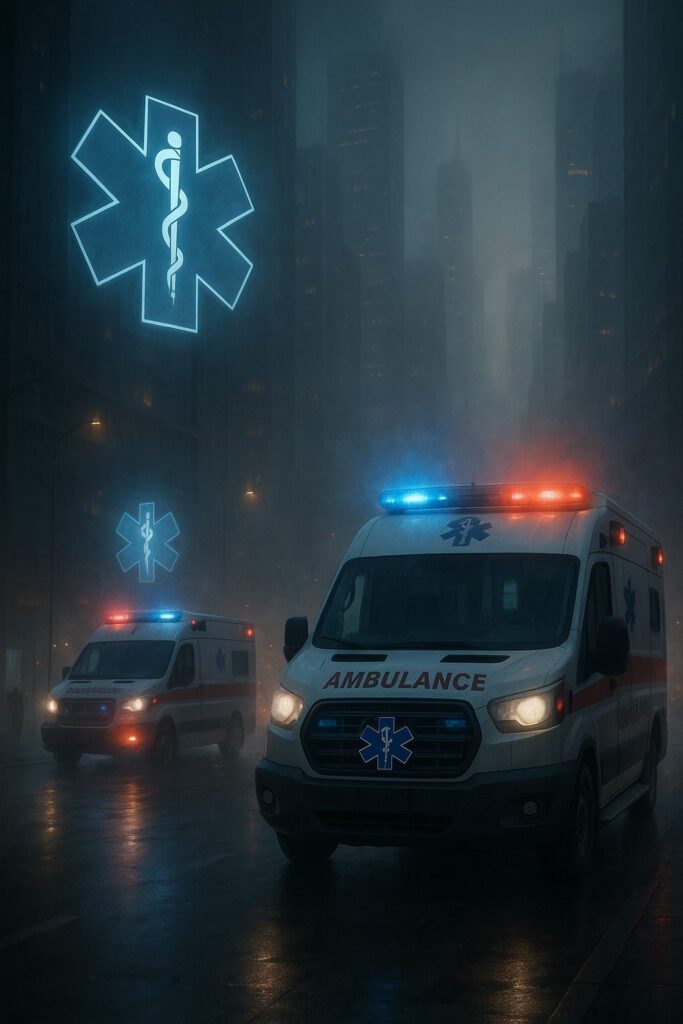
The tones drop at 3:17 AM
Somewhere across the city, a mother is screaming that her child cannot breathe. A man clutches his chest in the middle of a casino floor. An overdose victim turns blue in a locked bathroom. A rollover accident traps an entire family beneath twisted metal on a desert highway.
And somewhere else — maybe only a few miles away — an ambulance sits empty.
Not because nobody called.
Because nobody is left to answer.
This is the reality explored in Mocking Time: How Paramedics Save Minutes, Lives, and The Crisis Behind Who Will Answer the Next Emergency Call — a profession quietly collapsing beneath the weight of burnout, fatigue, shrinking recruitment, political neglect, and a healthcare system demanding more from fewer providers every single year.
The public still believes help is always coming.
What they do not realize is that EMS systems across the country are increasingly operating one staffing shortage away from failure.
The Illusion of Coverage
From the outside, EMS appears functional.
The ambulances still drive.
The lights still flash.
The radio traffic never stops.
But behind the curtain, many systems are being held together by overtime, exhaustion, mandatory callbacks, and providers running on caffeine, trauma, and obligation.
There are cities where ambulances routinely post with one medic and one EMT fresh out of school because there are no other options left.
There are rural areas where a single ambulance covers entire counties.
There are providers working 24, 36, even 48-hour shifts with fragmented sleep and impossible call volumes.
And increasingly, there are moments when nobody is available at all.
The terrifying part is this:
The collapse of EMS does not happen all at once.
It happens slowly.
Quietly.
Call by call.
Unsafe Staffing Is Becoming the New Normal
The most dangerous phrase in modern EMS may be:
“We made it work.”
EMS providers are masters at compensating for broken systems. They always have been. They skip meals, hold over after shifts, miss family events, and continue answering calls long after exhaustion has impaired their judgment.
But adaptation has consequences.
What was once considered crisis staffing is now routine operations.
Ambulances that should be staffed with experienced clinicians are increasingly filled with:
- Brand-new graduates
- Providers working excessive overtime
- Crews unfamiliar with their response areas
- Burned-out medics emotionally detached from patient care
Administrators call it maintaining coverage.
Field providers call it survival mode.
Because the truth is simple:
Fatigued providers make mistakes.
Medication errors.
Missed assessments.
Delayed recognition of critical illness.
Poor scene decisions.
Dangerous driving.
And yet EMS culture often glorifies the exhaustion.
The medic who hasn’t slept in 20 hours is praised for dedication instead of questioned as a patient safety risk.
No hospital would allow an exhausted physician to continue practicing indefinitely.
EMS does it every day.
The Inexperience Crisis
There was once a time when new paramedics entered systems surrounded by experienced clinicians who could mentor them through the chaos.
That safety net is disappearing.
Veteran providers are leaving EMS in staggering numbers:
- Retirement
- Burnout
- Better-paying careers
- Mental health exhaustion
- Physical injury
- Toxic workplace culture
What remains are systems increasingly staffed by newer medics training newer medics.
The result is a dangerous experience vacuum.
This is not an attack on new providers. Every medic was once new.
The problem is not youth.
The problem is systems forcing inexperienced providers into critically high-acuity environments without the mentorship, staffing, or clinical support necessary to succeed safely.
In many areas, medics with less than a year of experience are functioning as lead clinicians on the worst calls imaginable:
- Pediatric arrests
- Multi-system trauma
- Complex airway management
- Mass casualty incidents
- Violent scenes
- Critical medical emergencies
And they are expected to perform flawlessly.
Not because the system is healthy.
Because there is nobody else left.
Fatigue Is the Silent Killer of EMS
Fatigue in EMS is not simply “being tired.”
It is cognitive deterioration.
Reaction times slow.
Decision-making worsens.
Memory becomes fragmented.
Emotional regulation collapses.
Providers become numb.
And numbness is dangerous in medicine.
Fatigue destroys empathy.
It destroys critical thinking.
It destroys resilience.
Many EMS providers now live in a permanent state of physiological stress:
- Sleep deprivation
- Chronic hypervigilance
- Poor nutrition
- PTSD
- Depression
- Emotional detachment
The body eventually keeps score.
Heart disease.
Addiction.
Divorce.
Suicide.
Career-ending burnout.
The public sees ambulances.
They do not see the exhausted clinicians inside them silently unraveling.
Shrinking Applicant Pools
The next generation is watching.
And many are deciding EMS is not worth the sacrifice.
Young recruits see:
- Low wages
- Unsafe working conditions
- Violence against providers
- Endless overtime
- Minimal respect
- Crippling student debt
- Broken work-life balance
Meanwhile, healthcare systems continue asking paramedics to perform at increasingly advanced clinical levels while often compensating them far below comparable professions.
Modern paramedics interpret cardiac rhythms, manage ventilators, administer life-saving medications, perform invasive procedures, and make split-second critical care decisions.
Yet many still work second jobs to survive financially.
The result is predictable:
Fewer people are entering EMS.
And many who do enter leave quickly.
The profession is no longer merely struggling to recruit.
It is struggling to convince people the sacrifice is worth making.
What Happens Next?
This is the question at the center of Mocking Time: How Paramedics Save Minutes, Lives, and The Crisis Behind Who Will Answer the Next Emergency Call.
What happens when the staffing shortages become irreversible?
What happens when response times double?
When experienced medics disappear?
When ambulances remain parked because nobody is available to staff them?
When communities discover that dialing 911 does not guarantee immediate help anymore?
The answer is uncomfortable.
EMS systems may increasingly enter survival-based operations:
- Fewer ambulances
- Longer wait times
- Lower hiring standards
- Increased provider burnout
- Reduced clinical experience
- Greater dependence on exhausted personnel
Communities may one day discover that emergency medicine is not immune to collapse simply because society expects it to exist.
The system survives only as long as people are willing to sacrifice themselves to hold it together.
And many are reaching their limit.
The Profession Must Decide What It Wants to Become
EMS stands at a crossroads.
One path continues the current trajectory:
understaffing, burnout, fatigue, declining recruitment, and operational collapse hidden behind flashing lights and public misconceptions.
The other path requires transformation:
- Better education
- Better pay
- Safer staffing
- Mental health protections
- Professional recognition
- Clinical advancement
- Sustainable operations
Because the reality is this:
You cannot continue asking providers to sacrifice endlessly while giving them fewer reasons to stay.
Eventually, the sirens still sound…
…but nobody answers.
From the Front Lines — Field Notes and Insight
For more EMS commentary, leadership discussions, operational analysis, and stories from the profession, visit Paramedic Hive.